Why "Human in the Loop" Is Broken in Most AI Platforms (And How to Fix It)
July 20, 2026
Ask an AI platform vendor about human oversight and you'll hear the same answer: "We support human in the loop." Look closer and it's usually one thing — a pause button. The workflow stops, someone clicks approve or reject, the workflow resumes.
That isn't oversight. That's a speed bump.
Real work doesn't run on binary approvals. When a procurement committee evaluates a vendor, they score criteria. When an on-call engineer reviews an incident plan, they adjust it. When a data owner grants access, they set scope and duration. If your AI platform can only ask yes-or-no questions, every one of these workflows dies at the human checkpoint — or worse, gets rubber-stamped because the checkpoint carries no information.
What the approve/reject model gets wrong
Three failures show up consistently.
The human gets no context. An approval request arrives with a title and two buttons. The reviewer can't see what the AI did upstream, what data it used, or what happens downstream. So they either dig through another system to find out, or they click approve and hope.
The human can't add anything. Approval is the floor of human judgment, not the ceiling. Most checkpoints exist because a person needs to contribute something — a correction, a score, a file, a decision between options. A binary gate throws that away.
The request lives in the wrong place. If reviewing AI work means logging into yet another dashboard, reviews sit in queues for days. The checkpoint becomes the bottleneck, and someone eventually asks why the "automation" is slower than the manual process it replaced.
What enterprise HITL actually requires
We built Findable's human-input system around a different premise: the AI should collaborate with people the way work actually flows.
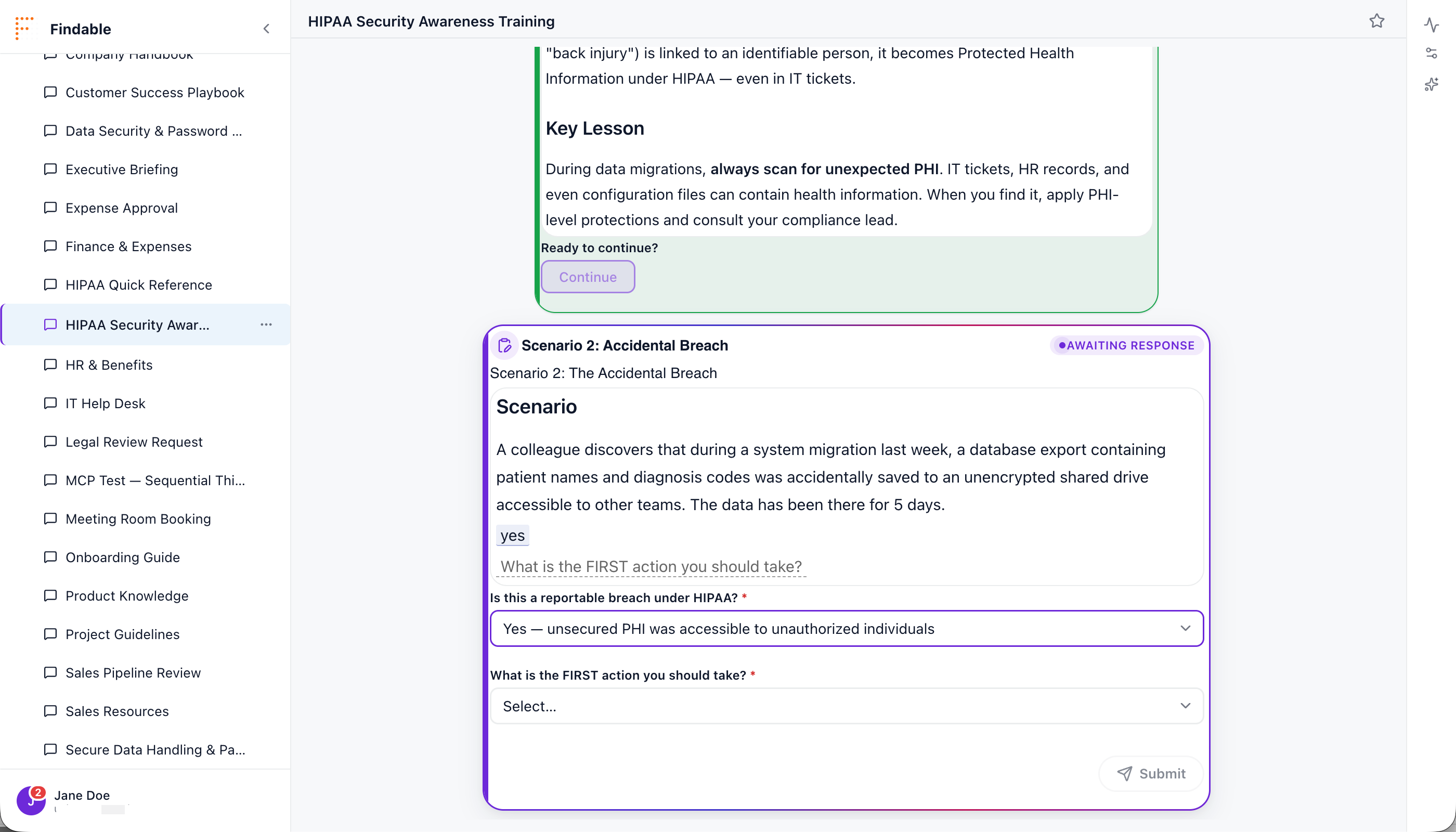
Structured forms, not buttons. When a Findable flow reaches a human checkpoint, it can send a full multi-field form — 17 field types including tables, repeaters, file uploads, hierarchies, and user pickers. The AI can even generate the form on the fly to match what it needs to learn from the reviewer.
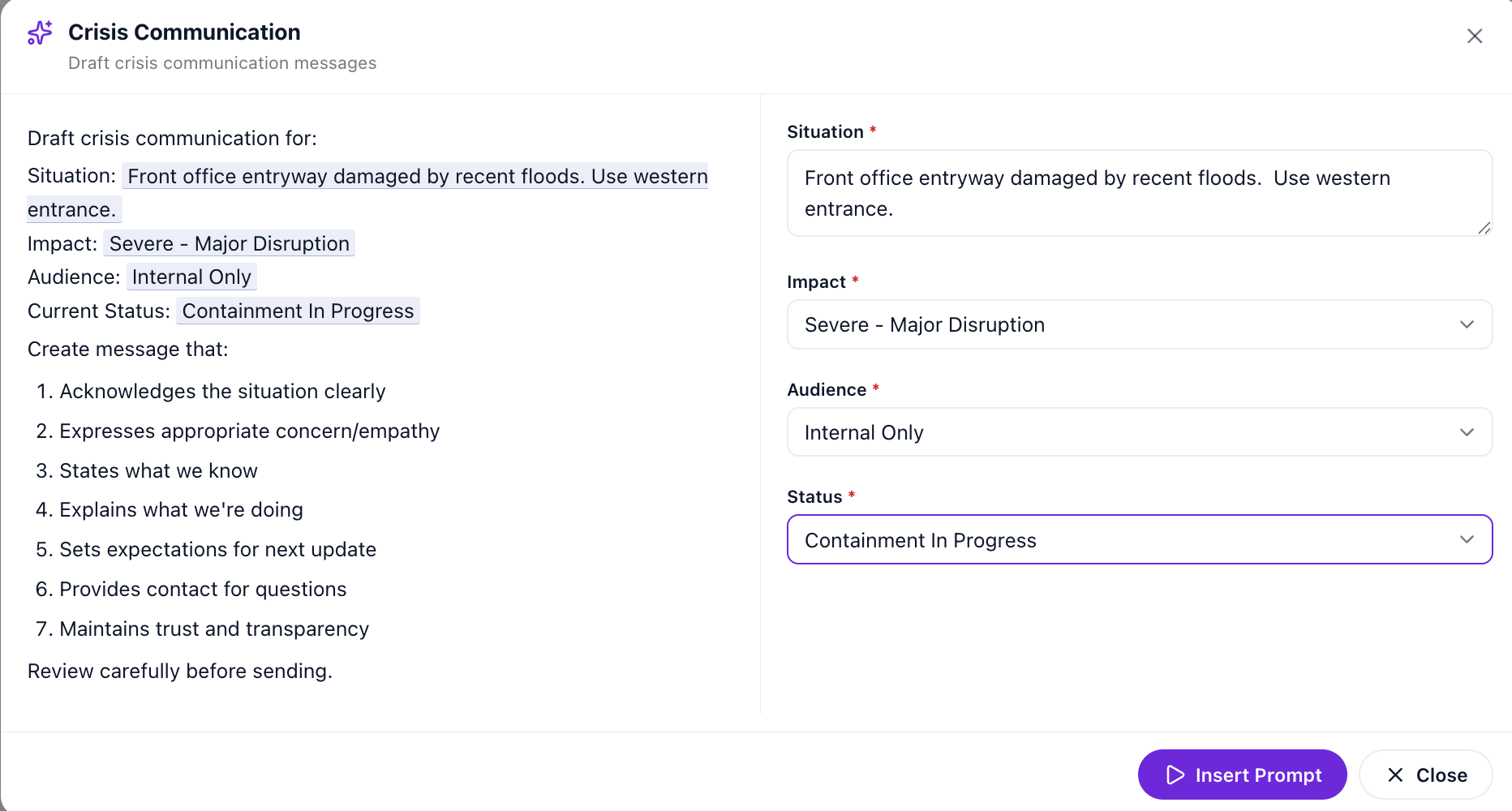
Forms guide the way in, too. The same system shapes how work enters the AI, not just how approvals come back. Teams curate prompt templates with typed inputs — a crisis-communication form with a situation field, impact and audience dropdowns, and a status selector — so a task everyone performs occasionally gets performed well every time. The forms themselves can be designed with AI assistance, and their selection options don't have to be hand-maintained: dropdowns populate from live sources — AI-based tools, directory groups, or straight from your own databases. Add AI-generated forms assembled at runtime, and the effect is the same whether a form is used standalone or as a step in a business process: guided, predictable interaction instead of a hundred employees improvising at a blank chat box.
Routing to the right people, not the nearest person. Forms route to specific users, Azure AD groups, or dynamically computed audiences. Response strategies handle the group dynamics: first responder wins, everyone must answer, majority vote, or sequential sign-off. Assignees can delegate, with an audit trail.
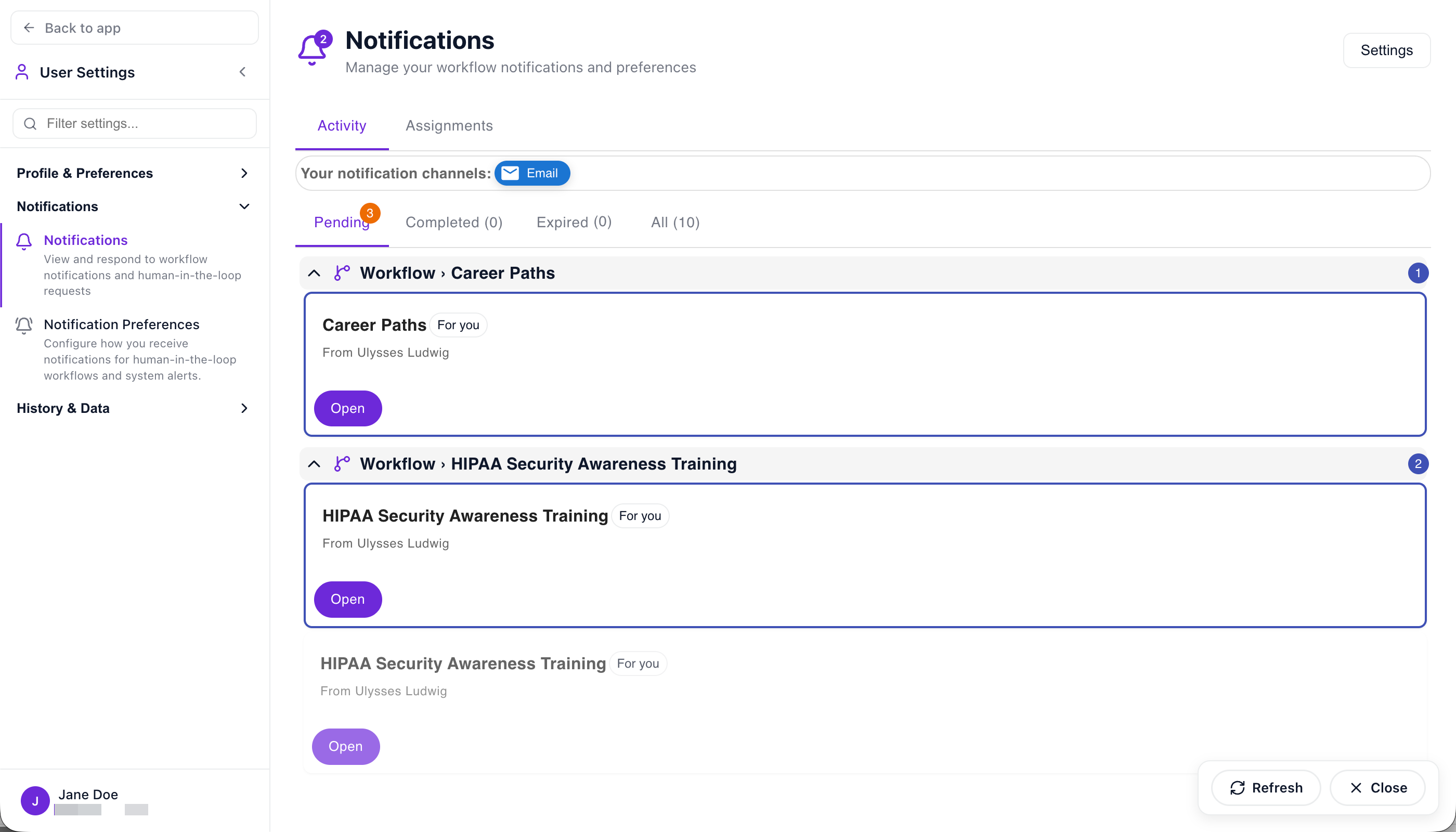
Delivery where people already work. Forms render natively as Slack Block Kit messages, Teams Adaptive Cards, email, and in-app notifications. The procurement committee votes in Teams. The engineer approves in Slack. Nobody logs into anything new.
Context attached. Reviewers see the upstream flow outputs and relevant conversation history alongside the form. Informed decisions, not blind ones.
The payoff
When the human checkpoint carries real information in both directions, something changes: teams stop treating oversight as friction and start designing workflows around it. Access requests that route structured forms to data owners. Incident plans that arrive as editable proposals, not faits accomplis. Vendor evaluations that collect scored input from five stakeholders and tally the majority.
That's what human in the loop was supposed to mean.
Findable is an enterprise AI platform that runs inside your Azure tenant — your data, your governance, your rules. See how its human-input system works: request a demo.